
Visit
What to see in Vilanova i la Geltrú
The capital of the Garraf combines a centre of shopping streets, a seafront with beaches and a harbour, and museums that tell its story of the sea, the railway and the “indianos”.

Museums
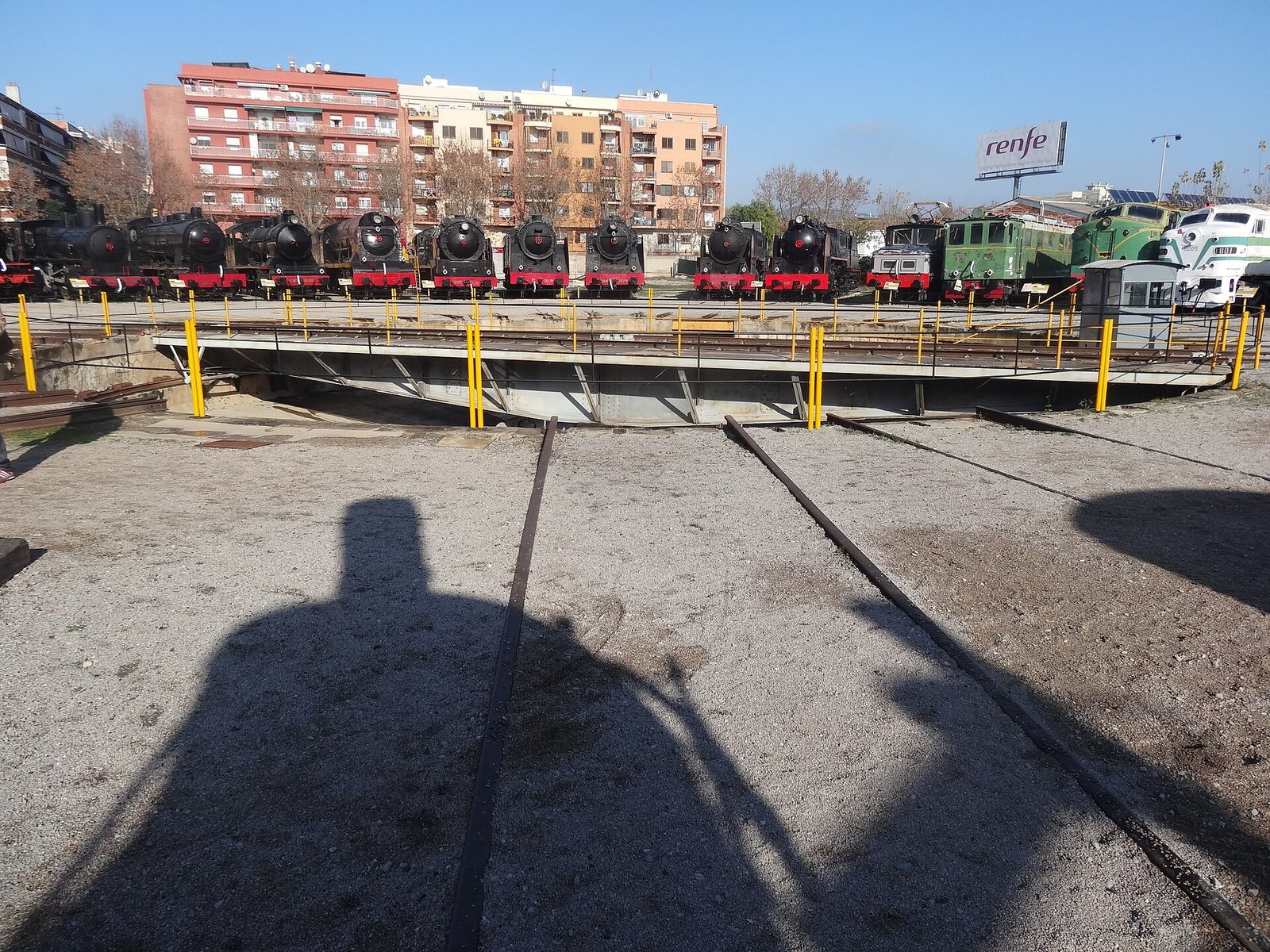
Catalonia Railway Museum: the roundhouse and locomotives
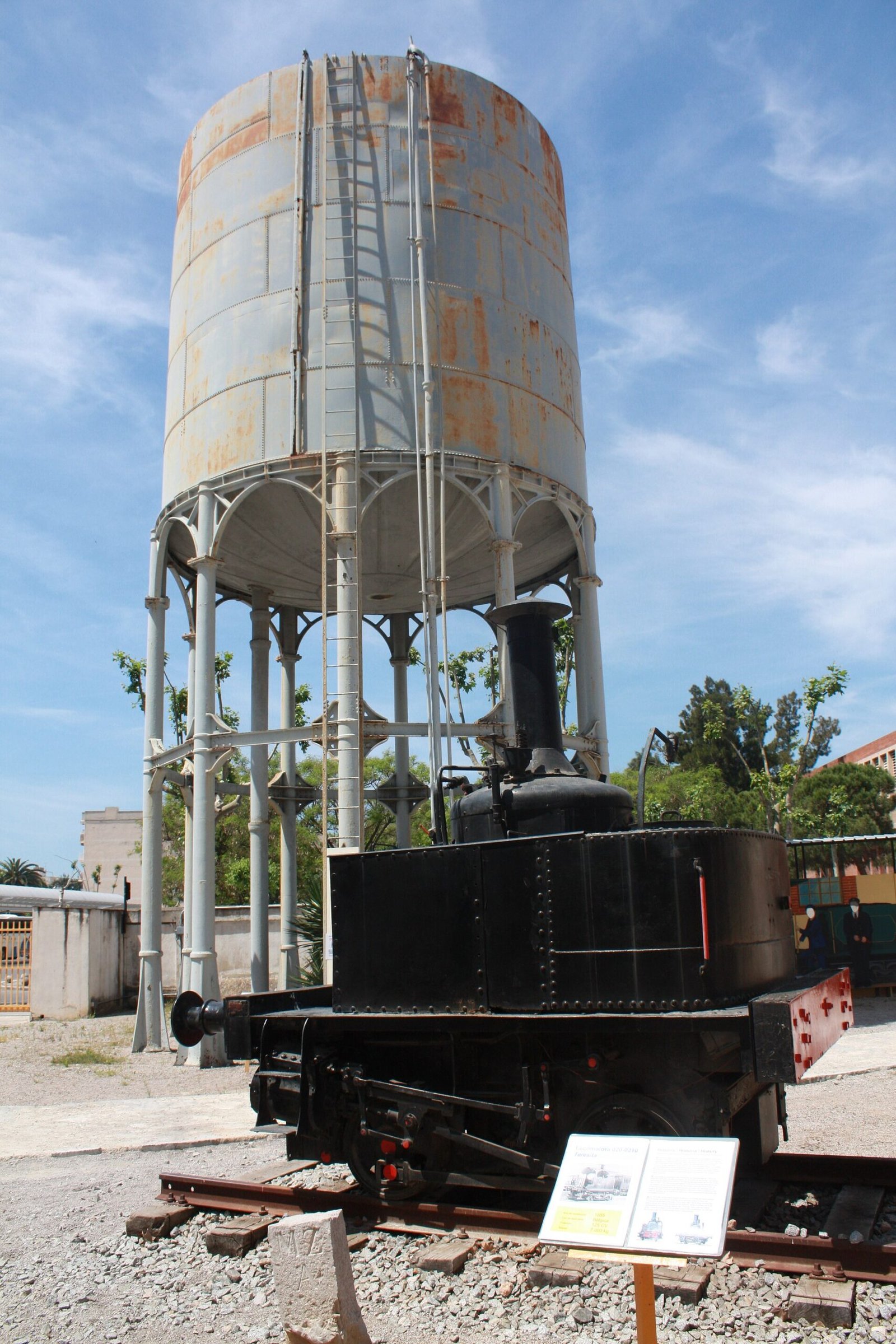
The museum occupies the original steam locomotive depot, railway buildings from the late 19th and early 20th centuries; the line reached Vilanova in 1881. Its centrepiece is the roundhouse, with 12 covered tracks and a turntable, where most of the historic vehicles are gathered. The collection has more than fifty pieces, including around 25 steam locomotives, plus electric and diesel engines, passenger coaches and wagons. Plaça d’Eduard Maristany, s/n, next to the Rodalies station: it is the starting point of the official walking route through the centre (on foot, no transfers from the train). Hours and prices according to its website, October 2026: Tuesday to Sunday 10:00-14:30 and Saturdays also 16:00-19:00 (extended hours in July and August); general admission 8.50 EUR, reduced 6 EUR, Sundays from 12:00 5 EUR. Tel. +34 938 158 491.
Railway Museum: highlights
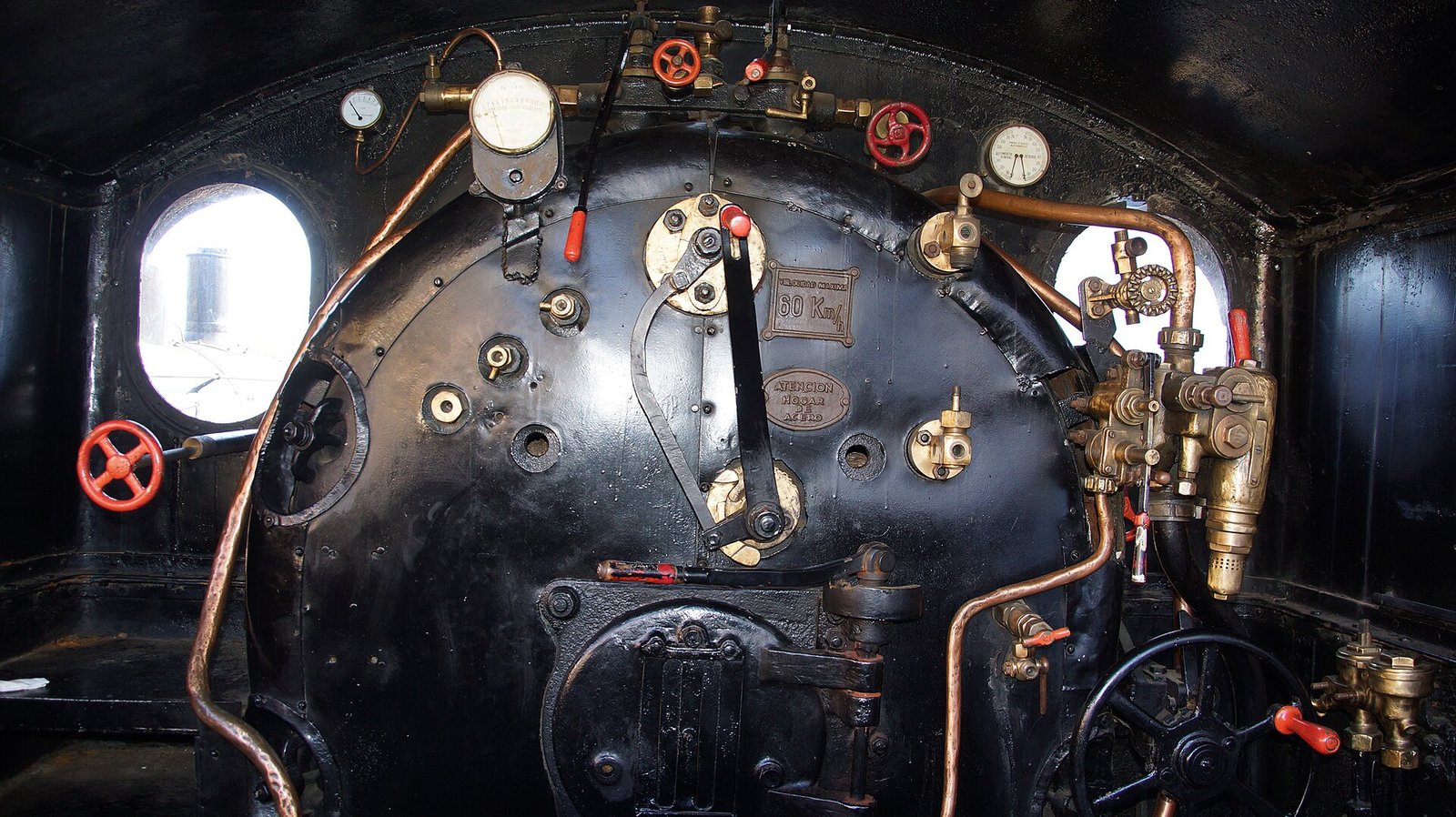
Among the best-known pieces are the Martorell (1854), the oldest original steam locomotive preserved in Spain, and the Mamut (1857), the second oldest. The Mikado 141F-2348, regarded as the last steam locomotive to run in Spain, and the Cocodril 272-006 (1928), an early electric locomotive, are also kept here. The museum also shows the Subirachs sculptural frieze from Barcelona-Sants station and the 1948 replica of the Mataró, the first Barcelona-Mataró train, which runs on the first Sunday of each month. Same site as the previous entry (plaça d’Eduard Maristany, next to the station). Data from Wikipedia; confirm the Mataró running calendar with the museum.
Víctor Balaguer Library-Museum: building and paintings
Founded by the writer and politician Víctor Balaguer, it opened on 26 October 1884 in a building designed by Jeroni Granell i Mundet, and is one of the first in Catalonia built from scratch to display collections to the public. It was declared a Museum of National Interest in 2019. The picture gallery includes a historic deposit from the Prado, with works by El Greco, Ribera, Murillo and Goya (among them a portrait of Maria Luisa of Parma), and 19th-century Catalan painting by Martí Alsina, Rusiñol and Casas. Avinguda de Víctor Balaguer, s/n, in a landscaped enclosure next to the station square (stop 2 on the official route through the centre). Hours and prices according to its website, October 2026: Tuesday to Friday 10-14; Saturday and Sunday 11-14; afternoons Tuesday to Saturday 17-19 (Thursday 19-21); closed Monday. General admission 5 EUR, reduced 2.50 EUR; free on Thursdays 19-21 and the first Sunday of each month. Tel. +34 938 154 202.
Víctor Balaguer Museum: Egypt, Modernisme and local art
The Egyptian collection, donated by Eduard Toda in 1886, includes amulets, ushabtis, funerary masks and the mummified body of a five-year-old child named Nesi. Other rooms hold pre-Columbian, Oriental and Philippine art, ceramics and glass, the 1956 Bequest (Rusiñol, Casas, Anglada-Camarasa, Nonell, Mir) and the 1925 decorative scheme for the Cafè Foment by Mir, Ricart, Torrents and Cabanyes. Contemporary art comes from Barcelona’s first Museum of Contemporary Art (1960), with Guinovart, Alcoy and Saura. Same building (Avinguda de Víctor Balaguer, next to the station). Collection descriptions from the museum’s official website.
Can Papiol Romantic Museum
A house-museum in the old town that recreates everyday life in a wealthy 19th-century family home. The neoclassical building went up around 1801 for Francesc de Papiol i Padró; the Diputació de Barcelona bought it in 1959 and the museum opened in 1961. It keeps original furniture, Bohemian and Murano crystal chandeliers, a library of about 5,000 volumes, 19th-century Catalan painting and biblical grisaille murals. Carrer Major, 32 (stop 13 on the official route through the centre, after plaça de Pau Casals and plaça de la Diputació). Hours according to the municipal listing, October 2026: May to October Friday to Sunday 11-14 and 17-19 (Thursdays too in July and August); November to April Friday and Saturday 11-14 and 17-19, Sunday 11-14. Visits are always guided with limited capacity; the listing recommends buying tickets in advance (price not published there). Tel. +34 938 930 382.
Masia d’en Cabanyes (CIRMAC)
A neoclassical country house built around 1798 by the Cabanyes family, where the poet Manuel de Cabanyes (1808-1833), who brought European Romanticism to Catalonia, died. The town council received it in 1975 and it was declared a Cultural Asset of National Interest in 2014. It now houses the Manuel de Cabanyes Romanticism Interpretation Centre, run by the Garraf county council, with the poet’s room and period rooms. On the outskirts (north side) of the built-up area; the municipal listing gives no street address or walking directions, so check a map or call ahead. Hours and prices according to the municipal listing, October 2026: Sundays 11-14; guided visit 3.20 EUR, reduced 2.20 EUR, free with a Super 3 card, over-65s and under-3s. Tel. +34 938 115 715.
Espai Far and Sea Museum
The Espai Far, opened on 16 July 2016 beside the Sant Cristòfol lighthouse, brings together three permanent exhibitions. The Sea Museum occupies the former lighthouse keeper’s house and shows fishing objects donated by fishermen and residents, with an oral-memory section. The Espai Víctor Rojas displays a 1916 lifeboat, one of only three of its type preserved in Catalonia, and the Roig Toqués Museum of Maritime Curiosities includes the carp Juanita, which learned to drink from a bottle. Pujada del Far de Sant Cristòfol, 2, at the south end of the seafront; the MNACTEC route links it on foot, along the coast, with the Railway Museum (no distances published). Hours according to the municipal listing, October 2026: January, February, November and December Friday to Sunday 10-14; March to June, September and October Friday to Sunday 10-14 plus Saturday 17-19; July and August Wednesday to Sunday 10-13 and 17-20. Price: combined ticket with Torre Blava 6 EUR (general) and 4 EUR (reduced), per the Torre Blava page. Tel. +34 600 509 223.
Torre Blava – Espai Guinovart
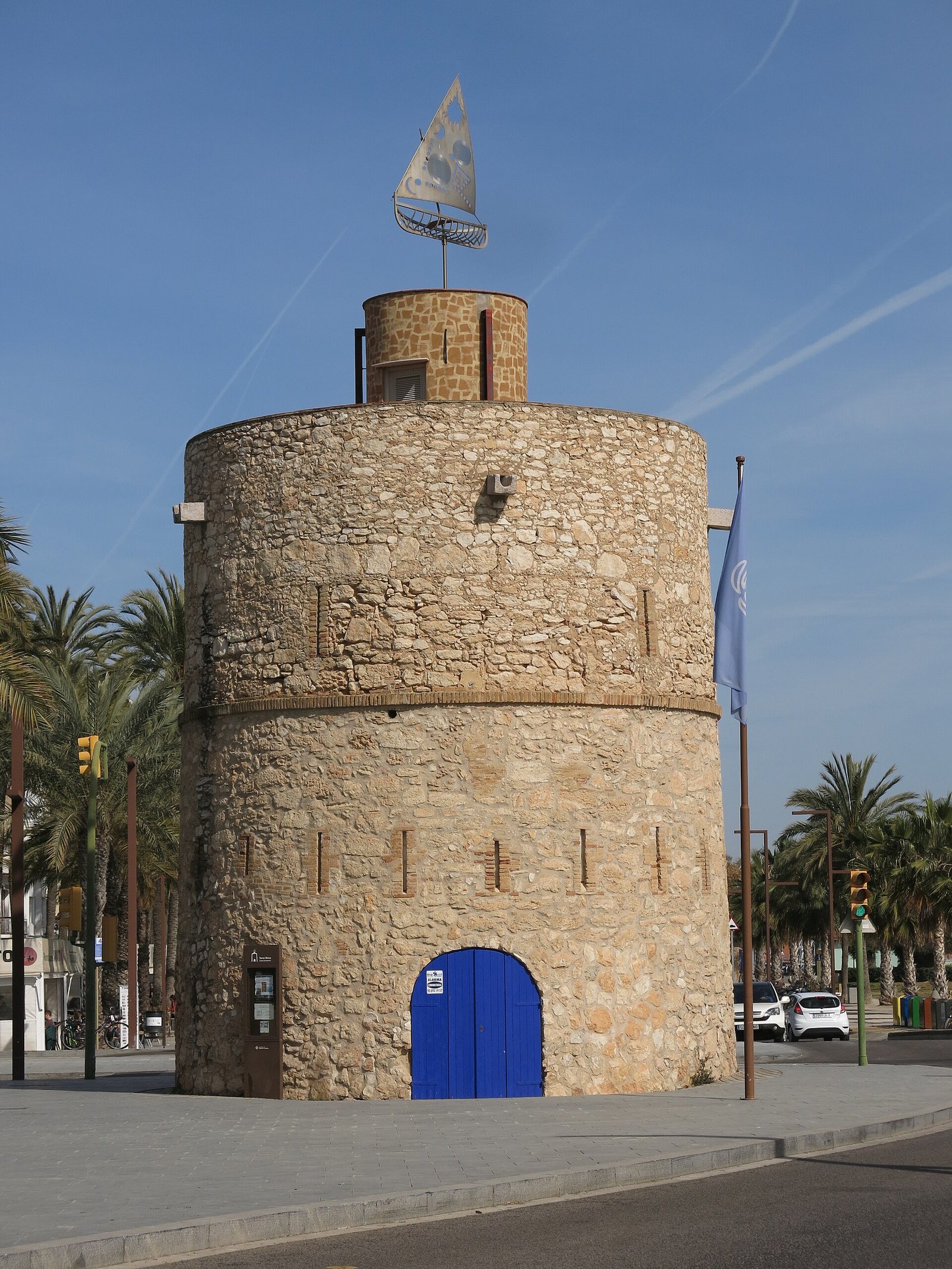
A former Carlist fort built in the last third of the 19th century to defend the Baix-a-mar district; it is the only one of three coastal towers still standing and a Cultural Asset of National Interest. In 2000 Josep Guinovart turned it into a tribute to the Mediterranean: the first floor reinterprets pirate and shipwreck legends, the second hangs fishermen’s knots from a rope structure and the third honours artists inspired by the sea. The terrace overlooks the seafront and the lighthouse. Passeig de Ribes Roges, s/n, right on Ribes Roges beach, at the end of the Rambla along the seafront. Hours and prices according to the municipal listing, October 2026: summer (13 June-13 September) Saturdays and Sundays 18-21; special dates in 2026 (Easter, Museums Day, European Heritage Days, Fira de Novembre) 11-14. Admission 3 EUR, reduced 1.50 EUR; combined with Espai Far 6 EUR / 4 EUR. Tel. +34 938 154 202.
Heritage and monuments
Castell de la Geltrú
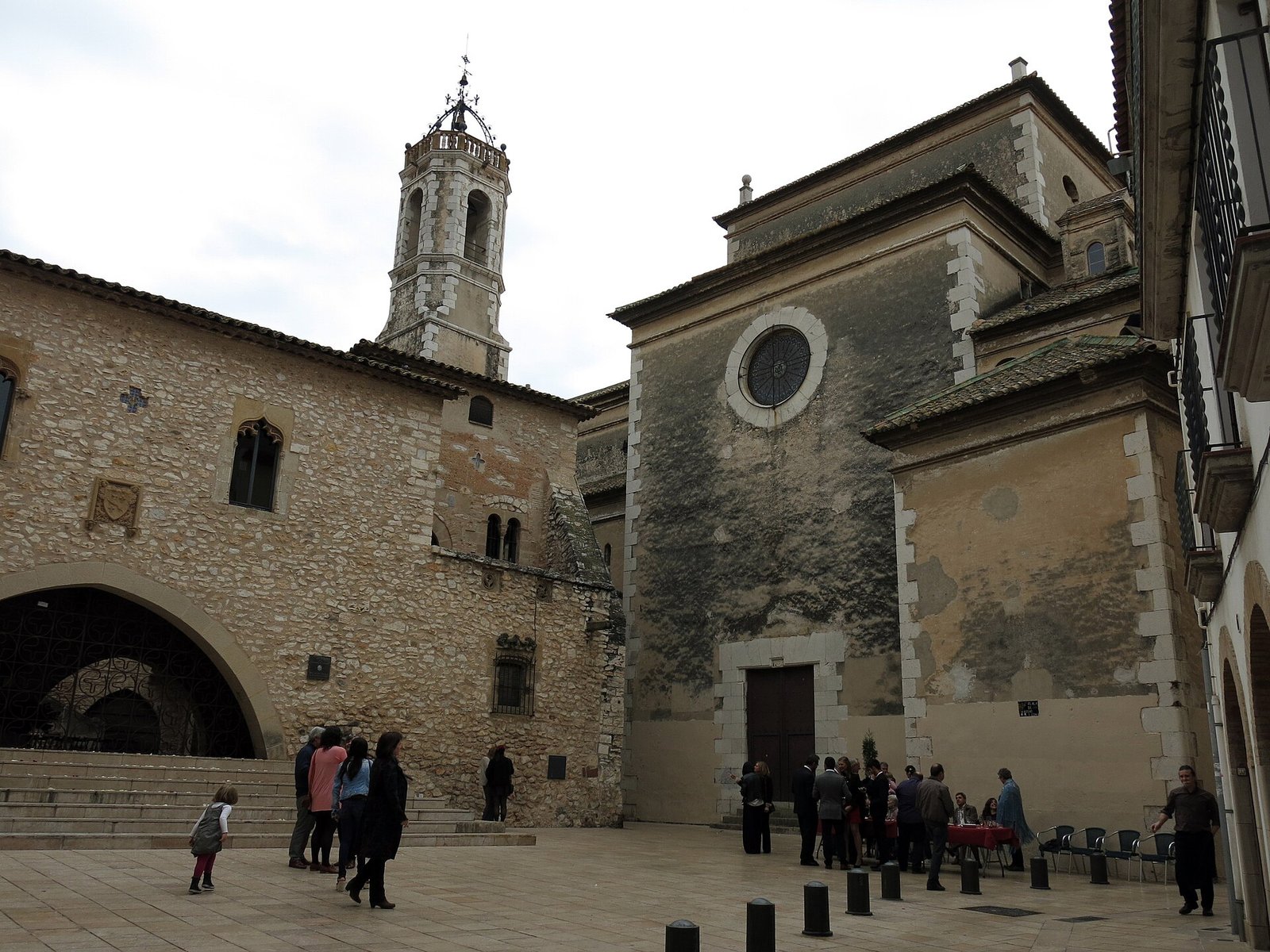
Its first written mention dates from 1078 and it was built between the 12th and 15th centuries as a stronghold dependent on the Castell de Ribes. In 1862 a demolition attempt destroyed the circular central tower; it was rebuilt in 1918-1920 with patronage from Josep Font i Gumà and advice from the architect Jeroni Martorell. It is a Cultural Asset of National Interest and has housed the Garraf county archive since 1997; the courtyard has large Gothic pointed arches. Plaça de Font i Gumà, 1 (plaça del Castell), in the old La Geltrú quarter, next to the church of Santa Maria; it is the meeting point of the guided walk through La Geltrú. No published visiting hours could be verified.
Church of Santa Maria de la Geltrú
It is the Baroque parish church of the medieval core of La Geltrú and stands next to the castle. The heritage list protects it as a Cultural Asset of Local Interest and dates it to the 17th century. With the castle and the first streets of the quarter it forms the group covered by the walk on the «millennial Geltrú». Plaça de l’Assumpció, 1, next to plaça del Castell and plaça de la Peixateria. Data from the Wikipedia monuments list (IPAC inventory).
Church of Sant Antoni Abat
Construction was agreed in 1663 to replace a 14th-century Gothic church, to a design by Fra Josep de la Concepció. The War of the Spanish Succession halted the work, which resumed in 1734; the church was blessed in 1771 unfinished, again in 1831, and the facade was completed in 1879. It is a Baroque and neoclassical three-nave basilica with side chapels, badly damaged in 1936 and rebuilt until 1977. Plaça de Sant Antoni Abat (with a second facade on plaça de les Neus), at the upper end of the Rambla Principal. Data from Wikipedia; no opening hours were verified.
Sant Antoni Abat bell tower
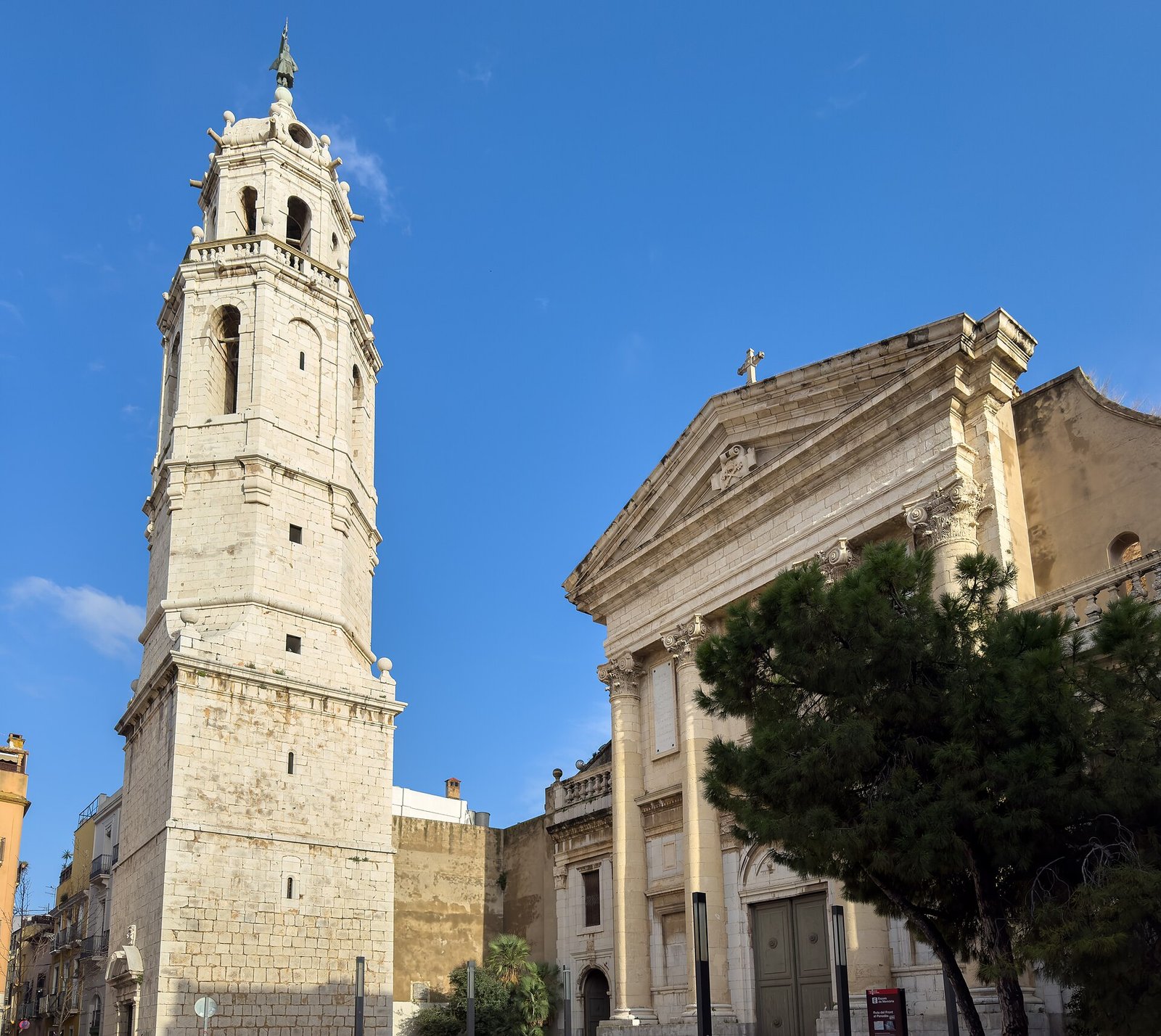
The Baroque bell tower stands apart from the church and was built in three phases, finished in 1706. It has a square base and two octagonal upper sections, topped by a dome, a metal sphere and a bronze angel. A coat of arms dated 1673 on the base doorway and an inscription of 1706 in the vault date its stages. Visible from plaça de Sant Antoni and from carrer Nou / portal del Nin, stop 11 on the official route through the centre. Wikipedia gives no height.
Plaça de la Vila and Town Hall
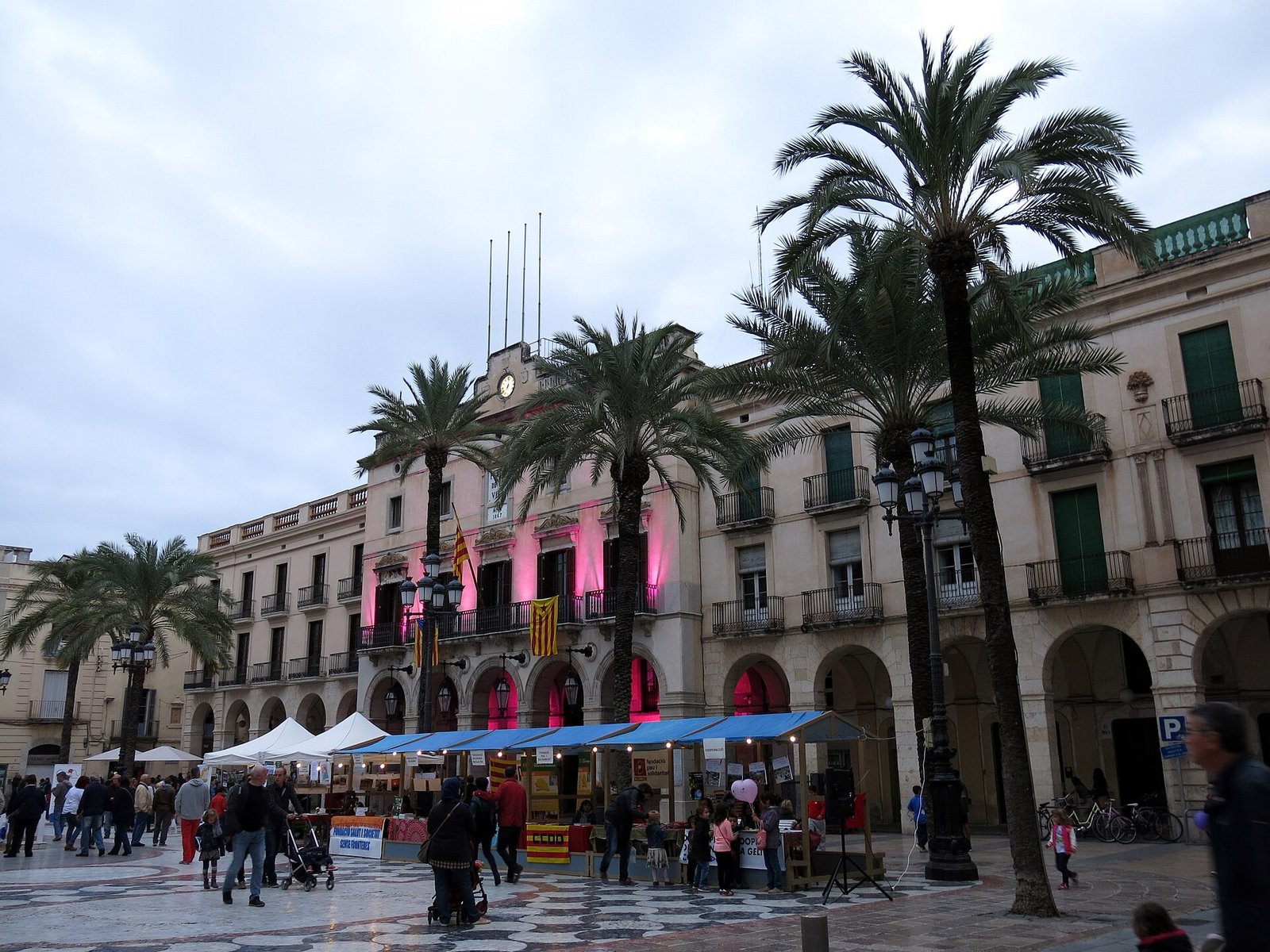
The rectangular square, arcaded on two sides, was laid out on the site of the Capuchin convent, sold in 1835. In 1851 Josep Tomàs Ventosa i Soler, an indiano, donated part of the land to the town; his monument has stood at the north-west corner since 1883. It is a Cultural Asset of Local Interest in neoclassical-romantic style, with the Town Hall at the back and black-and-white Portuguese paving. Stop 6 on the official route through the centre (about 30 minutes in total from the station). The Town Hall is at plaça de la Vila 8 and the tourist information point at number 11.
Plaça de les Cols and Foment Vilanoví
Plaça de les Cols was the old vegetable market. It holds the Cabanyes family house, where the pre-Romantic poet Manuel de Cabanyes was born. At number 10 stands the Foment Vilanoví, a mid-19th-century social club listed as a Cultural Asset of Local Interest; its Cafè Foment was decorated in 1925 with local scenes, now kept in the Balaguer Museum. Stop 10 on the official route through the centre, on the way to plaça de Pau Casals and carrer Major.
Can Pahissa and the Modernista houses
Can Pahissa, at Rambla de la Pau 48, was designed in 1921 for Sebastià Soler by the architect Josep Maria Miró i Guibernau and combines Catalan Modernisme with Ionic capitals. The town council bought it in 1983 and restored it in 1984 as a senior citizens’ centre. The heritage list includes other 20th-century Modernista buildings such as Can Ricart, the Orfeó Vilanoví, the Xalet Doctor Ribot and Can Gener. Rambla de la Pau 48, at the corner of carrer de Soler i Morell: seen while strolling down the Rambla towards the sea. Exterior viewing only; no public opening hours were verified.
Indiano houses and notable buildings in the centre
The official route through the centre points out the «house of the broken columns» on carrer dels Caputxins, whose legend says the owner bet the house would stand despite its broken columns. On plaça dels Cotxes, a former mansion built by an indiano now houses the El Cim school, and opposite it a building with a sgraffito facade was once the Banc de Vilanova. The birthplace of the composer Eduard Toldrà is nearby. Stops 7 to 9 on the official route through the centre, between plaça de la Vila and plaça de les Cols. Exterior viewing only.
Teatre Principal
Built in 1835 (the date is on the central lintel) with funding from wealthy families, to a design by Josep Buxareu Gallart. In 1862 Fèlix Cagé, a stage designer at the Liceu, painted the curtain and sets. The facade on carrer del Teatre was renewed in 1926 and the building was rehabilitated as a theatre in 1984; the heritage list records it as the Teatre Municipal, a Cultural Asset of Local Interest. Rambla Principal 2 bis, at the top of the Rambla, near plaça de les Neus. Best seen by attending a performance; no regular tourist visit could be verified.
Mercat Públic (Central Market)
The central market is a 20th-century rationalist building listed as a Cultural Asset of Local Interest. It stands on a wide square that hosts events such as Sant Jordi’s Day. Plaça Soler i Carbonell, in the town’s shopping centre. Official stall hours were not verified; check at the market itself.
La Peixateria Vella (old fish market)
This is the old fish market of the La Geltrú quarter, a 19th-century neoclassical building listed as a Cultural Asset of Local Interest, with the town’s coat of arms on the carrer Unió facade and a central skylight. It gives its name to plaça de la Peixateria, from where the church of Santa Maria is also visible. A historic tour of Vilanova’s markets scheduled in 2016 included its interior. Carrer Unió 5, a few steps from plaça del Castell and Santa Maria. Current use and opening hours not verified.
Sant Cristòfol Lighthouse (La Farola)
The present tower was begun in 1902 and working by 1905, after earlier lights of 1834 and 1866. It is 21 metres tall, with a focal height of 27 m and a range of 19 nautical miles. It is a Cultural Asset of Local Interest and was switched off only during the Civil War. At the end of the seafront promenade, on Sant Cristòfol beach (the «Farola»), beside the Espai Far. The tower is admired from outside; the indoor visit to the complex is the Espai Far.
Molí de Mar (sea mill)
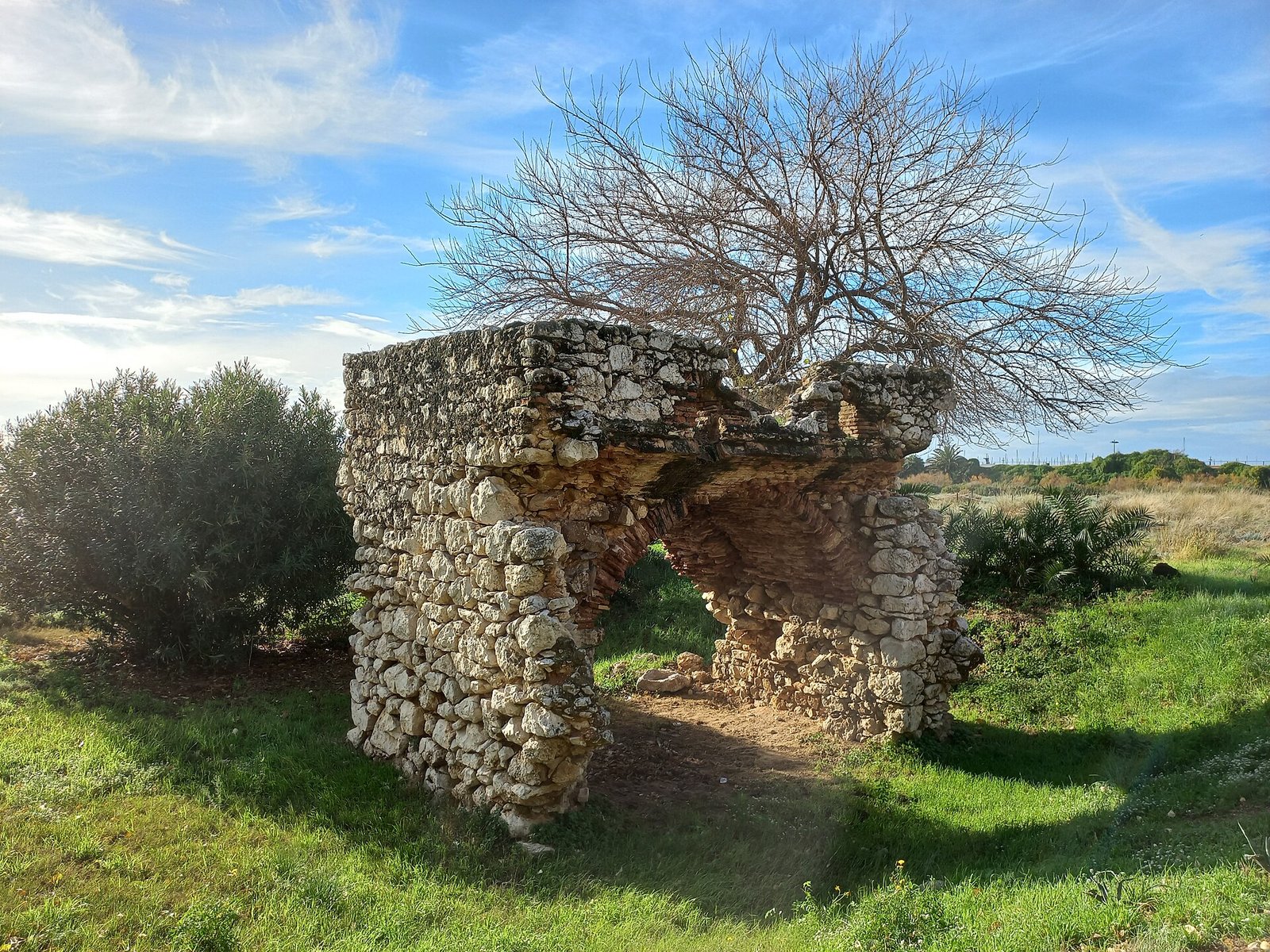
An almost iconic ruin on Sant Cristòfol beach: Francesc Terrés, from Sant Martí de Riudeperes, built it in 1801 to grind flour with wave power. A tank above the arch was meant to fill with seawater and turn a paddle wheel, but Mediterranean waves proved too weak. Less than forty years ago the sea still reached its base; since the harbour was built, sand has pushed the shoreline more than 100 metres away. Molí de Mar, s/n, on Farola beach; the surroundings were landscaped in 1975 (Jardins d’Enric Granados). The MNACTEC route places it on foot along the coast after the lighthouse/Espai Far, with no distances published.
Ribes Roges garden city
The Ribes Roges development, dating from 1910 and in Modernista style, is listed as a Cultural Asset of Local Interest; it grew in the early 20th century beside the beach, close to the Torre Blava. Holiday villas of that period can be seen along the promenade and beach. It is a stroll to see seaside architecture rather than a single monument. Passeig de Ribes Roges, around the Torre Blava. Exterior viewing.
Walks and viewpoints
Rambla Principal and Rambla de la Pau
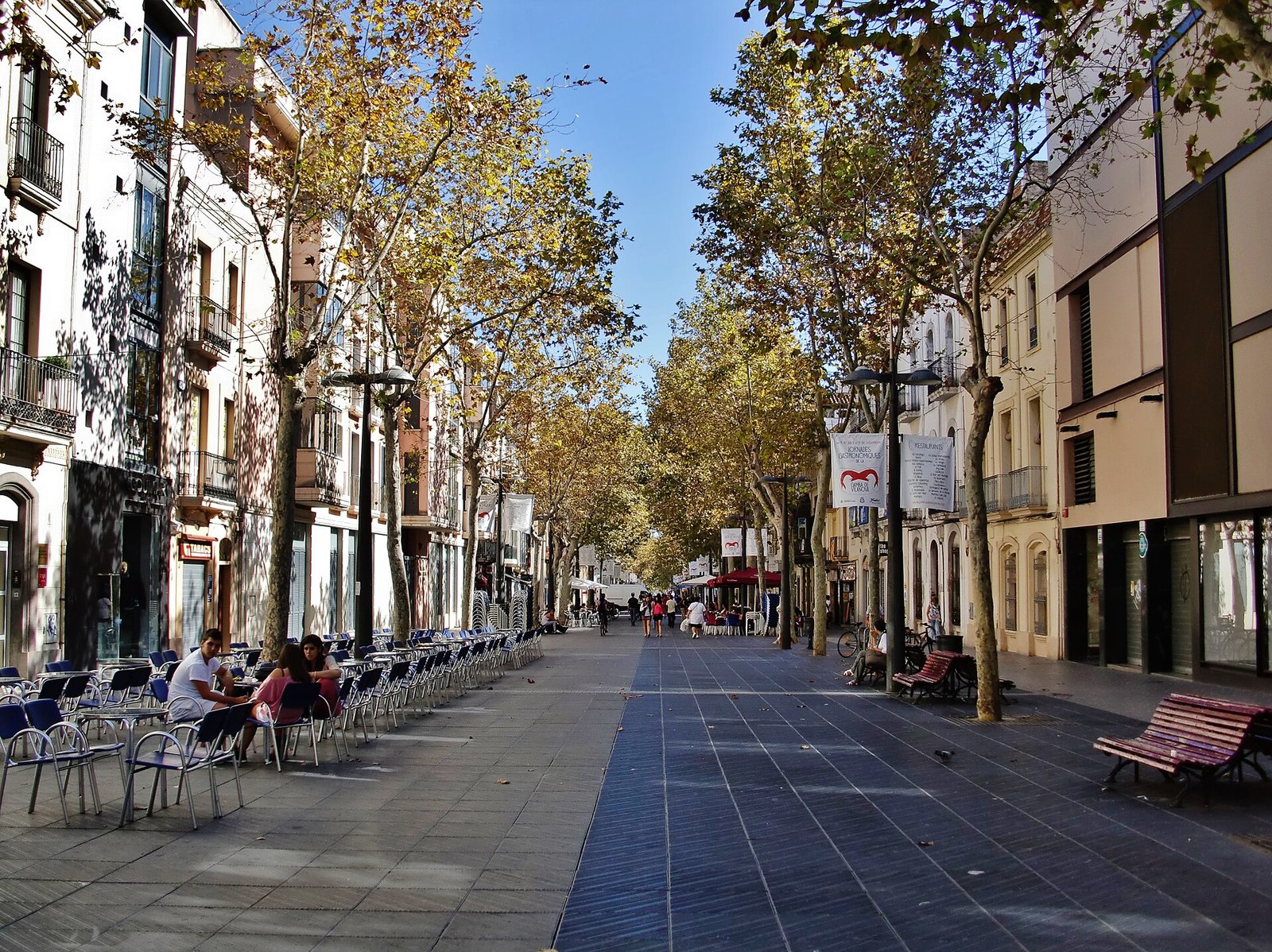
The Rambla began in 1754 at about 240 m long and grew to roughly 700 m after 1874; it reached the sea in 1957 and its last section was finished in 1963. It is a tree-lined central promenade with two roadways and two pavements, protected as a Cultural Asset of Local Interest, lined with eclectic, Modernista and historicist buildings. The lower section, from plaça Gumà to the sea, is the Rambla de la Pau; the railway crosses it at right angles there, with a pedestrian underpass. It runs from plaça de les Neus (Sant Antoni Abat church) to the Passeig Marítim; walking down it leads to Ribes Roges beach and the Torre Blava. No exact distances from the station are published.
Seafront promenade and Ribes Roges beach
Ribes Roges beach lies in the urban centre and is over a kilometre long. The promenade that borders it links the Rambla with the Torre Blava and, to the south, with the Sant Cristòfol lighthouse. A walking route published by Decathlon starts at the Ribes Roges seafront, passes the miniature railway circuit and ends on the Rambla. Reached by going down the Rambla de la Pau to the Passeig Marítim. The beach has no hours; the park with a miniature railway (run by AFEVI) is mentioned on Wikipedia, but its running days were not verified.
Harbour, Club Nàutic and fish market
The harbour is managed by the Club Nàutic Vilanova, which also runs a restaurant, swimming pool, car park and sports school. It has commercial, fishing, sports and large-yacht basins. The blue-fish auction is held standing on the fishermen’s quay and lasts about twenty minutes, according to a 2025 Ara report; the fish then goes to the fish market hall. South of the seafront promenade, next to the Sant Cristòfol lighthouse. No regular public visit to the auction or fish market was found; in 2018 there was a one-off visit («Puja a la barca») listed in the local agenda. Ask the Confraria de Pescadors.
Sant Cristòfol beach, Farola and Enric Granados gardens
At the southern end of town, Sant Cristòfol beach (also called Farola beach), the Molí de Mar and the lighthouse come together. From there you can see the harbour and the coast. It is the natural end of the seafront promenade and where the MNACTEC route from the Railway Museum passes. Reached by following the coast south from the Passeig Marítim. MNACTEC describes the Railway Museum – Lighthouse – Molí de Mar route with no distances; check a map for real walking times.
Guided visits and cultural routes
Official route: a walk through the centre
The town council publishes a self-guided urban route of about 30 minutes starting at the station square. It passes the Railway Museum, the Balaguer Museum, plaça dels Carros (with a Modernista fountain), carrer de Sant Sebastià, plaça de la Vila, carrer dels Caputxins, plaça de les Cols, the portal del Nin and plaça de Pau Casals. It ends on carrer Major with Can Papiol and the house of the marquesses of Samà. Start: plaça d’Eduard Maristany (station). Stated duration: about 30 minutes; the listing links a map. Self-guided: no booking needed.
Walk through the millennial Geltrú
The company ARC gestió cultural has offered an urban walk through the old La Geltrú quarter, starting at plaça de Font i Gumà (plaça del Castell). It covers the castle, presented as the town’s first construction, the first streets and the church of Santa Maria. It required advance booking by phone. Reference to a past edition (Sunday 10 May, 11:00; organised by ARC gestió cultural, tel. +34 639 868 491). Current dates are not verified: check the Turisme agenda.
MNACTEC maritime and industrial route
The MNACTEC industrial-heritage website proposes a route linking the Railway Museum, the Sant Cristòfol Lighthouse with the Espai Far, and the ruins of the Molí de Mar, built in 1801. It combines railway and maritime heritage along the coast. The article dates from July 2021 and gives no distances or times. Starts at plaça d’Eduard Maristany. Free-form route; each museum follows its own hours.
First Sunday of the month at the museums
The Balaguer Museum offers free entry on the first Sunday of each month, according to its website. Town council and local agenda listings from earlier years also announced free guided visits that day at Can Papiol and the Espai Far. They have fixed times and, for Can Papiol, advance booking. Can Papiol: bookings on +34 938 930 382. Current conditions at Can Papiol and the Espai Far were not verified: confirm beforehand.
Tourist office and guided-visit agenda
Vilanova Turisme publishes on vilanovaturisme.cat a tourist map with itineraries, including one for La Geltrú, and an agenda of guided visits and activities. A tourist information point operates at plaça de la Vila 11. The current list of official guided visits could not be consulted. Plaça de la Vila 11; email turisme@vilanova.cat; tel. +34 938 154 517. Office hours not verified.
Suggested routes
A full day
In the morning, the Railway Museum and the Víctor Balaguer Library-Museum, beside the station. Then the route through the centre: plaça de la Vila, plaça de les Cols, Sant Antoni Abat bell tower and Can Papiol, with lunch near the Mercat Públic. In the afternoon, the La Geltrú quarter (Castell de la Geltrú, Santa Maria and the Peixateria Vella) and, down the Rambla, the Torre Blava, the seafront and the Espai Far with the Molí de Mar at the end. Check each entry’s hours: not every museum opens daily or at the same times, and the Torre Blava opens only on summer weekends and special dates.
Half a day
Start at the station with the Railway Museum or the Balaguer Museum, depending on opening days. Follow the official route of about 30 minutes through plaça de la Vila and plaça de les Cols to Can Papiol on carrer Major. If times fit, finish with the Sant Antoni Abat bell tower seen from the portal del Nin. Can Papiol is guided-only and opens Thursday (summer) or Friday to Sunday; plan around its hours.
With children
Start at the Railway Museum, with the roundhouse, turntable and locomotives. Walk down the Rambla to Ribes Roges beach and its Torre Blava. Continue along the promenade to the Espai Far, with the Víctor Rojas lifeboat and the carp Juanita, and finish at the ruins of the Molí de Mar. Tickets and hours for each site are in its entry. Torre Blava and Espai Far have a combined ticket.







Official information
Vilanova Sí is an independent community website. Opening hours, prices and notices can change: always check the official sources.