
History · Heritage · Local memory
History of Vilanova i la Geltrú: 43 Anecdotes and Curiosities from Its Origins
From the Iberian workshops of Darró to the medieval streets of la Geltrú; from the trade with Cuba to the factories, the railway and the museums. The history of Vilanova i la Geltrú is best understood by following the lives, the places and the small surprises that have shaped the town. This journey brings together 43 episodes in chronological order and distinguishes documented facts from legendary traditions.
Approximate dates are marked as such. Contemporary photographs of monuments and archaeological remains are expressly identified, to distinguish them from period images.

Vilanova i la Geltrú in dates: a chronological summary
From ancient settlement to the recovery of local memory. Each episode links to its explanation.
5th–1st centuries BC
1. Before Vilanova: the Cossetani settlement of Darró
Long before the medieval town, the Iberian settlement of Darró, or Adarró, stood beside the turó de Sant Gervasi. Its inhabitants belonged to the Cossetani and made the most of the nearby sea to produce and exchange goods. The curiosity lies in its workshops: here there were not only homes and fields but also pottery-making and metalworking. The smiths’ quarter lets us picture a coast of kilns, tools and craftsmen, very different from the leisure beach we know today.

Around 50–40 BC–6th century AD
2. The Roman villa that looked out to the Mediterranean
Romanisation turned Darró into an agricultural estate within the territory of Tarraco. The villa went through several phases, and its residential area included a corridor open to the sea, built in the imperial period. Beneath the remains there is not a single frozen town but a succession of buildings and uses. Another curiosity is the long story of its discovery: finds are known from 1789, but systematic excavations began much later, in 1956. Modern archaeology continues to add to what we know about its inhabitants.

11th–13th centuries
3. La Geltrú grew up around a castle
The core of la Geltrú was organised around the castle and the church, within a society shaped by seigneurial rights. Its narrow streets and the closeness of its buildings preserve the scale of that settlement. The castle we see today combines medieval elements with a major restoration in the first third of the 20th century, directed by Josep Font i Gumà. To look at it as if all of it belonged untouched to the 12th century would therefore be misleading: its appearance tells of medieval history and of the later determination to recover heritage.

13th century · legendary tradition
4. A new town to escape the feudal lord
The foundation legend tells that residents of la Geltrú abandoned the lands of their lord to settle in the territory of Cubelles. Some versions attribute the flight to the so-called droit du seigneur. It should be told as a tradition, not as an episode attested by the Carta Pobla. Its strength lies in the idea of emancipation: the birth of a community seeking better conditions in the face of feudal impositions. Documented history confirms the growth of a new settlement; the dramatic details belong to popular storytelling.

27 July 1274
5. The Carta Pobla favoured two settlements, but only one prospered
Jaume I granted settlement privileges to Vilanova and to another settlement near the sea called sa Llacuna, both within the territory of Cubelles. This second settlement never reached the development of the Vila Nova. Nor did the document create houses out of nothing: it recognised and favoured a population that was already growing. The curiosity is that the town we know descends from one of two projects covered by the same charter. The other remained a historical possibility that never took hold.

1340–1384
6. The beach was a port before it had quays
In 1340, Pere el Cerimoniós authorised the loading and unloading of goods on the beach. Privileges followed, such as the annual fair of 1381 and the weekly market of 1384. That activity did not require a modern port: the beach was a place of work and maritime connection. The Fira de Novembre preserves the memory of that medieval origin, although it went through interruptions and transformations. The present-day fair was revived in 1991; it should not be presented as an event held without a break since the 14th century.

1368
7. One batlle for three communities
The incorporation of la Geltrú into the royal domain and its link with Cubelles and Vilanova in 1368 favoured a shared administration, presided over by a single batlle. The present-day town therefore did not arise from a simple, definitive merger in 1274. For centuries, distinct identities, interests and dependencies coexisted. The torrent de la Pastera had marked a boundary between the territories of la Geltrú and Cubelles; following its course helps us understand a territorial division that is hard to imagine today within a single town.

1579–1625
8. A seafarers’ confraternity that came to admit women
The confraternity of Sant Elm, Santa Clara and Sant Nicolau was approved in 1579 and brought together skippers and sailors. Besides religious devotion, such organisations offered an economic and social structure to seafaring people. A particularly curious item of news is the admission of women in 1625, a decision that, according to the local history of the institution, caused fierce controversy. It is a reminder that the maritime community was not made up solely of those who put to sea: families and women also played a part in its collective life.

1611–1647
9. Cubelles split off and la Geltrú joined up again
Cubelles formed its own independent municipality in 1611. Relations between Vilanova and la Geltrú were not immediately settled either: la Geltrú even had a council of its own in 1636, before the definitive union of 1647. The compound name preserves that history of rapprochements and disagreements. The existence of a shared municipality did not erase the personality of its settlements. The documents and the streets let us recognise a town built by successive agreements, more complex than the picture of two villages that simply grew until they touched.

1670–1706
10. The bell tower, its angel and a legend about the architect
The bell tower of Sant Antoni Abat was built between 1670 and 1706. It stands apart from the church we see today and survived the disappearance of the old Gothic church. Popular tradition says the architect threw himself from the top on discovering that it had come out crooked: this is a legend, not a documented death that we should take as certain. The original angel figure disappeared during the Civil War; a replica again crowned the tower in 1996. Its transformations sum up three centuries of urban memory.

18th–19th centuries
11. The little Havana: prosperity and the shadows of the colonial world
Atlantic trade and links with Cuba helped to transform Vilanova. The indianos, or ‘Americans’, financed homes, businesses and public facilities, and the town received the nickname l’Havana Xica. But not all of those fortunes have an exclusively philanthropic history: municipal research has re-examined the ties some of these figures had with colonial slavery. The town’s improvements deserve to be appreciated without hiding the economic system in which they were produced. The great houses are documents of prestige and social mobility, but they also invite us to ask where the wealth came from.

1790
12. The Carnival already appears in writing
Francesc de Papiol’s answers to Francisco de Zamora’s questionnaire document the Carnival in 1790. That date proves it existed, but is not necessarily the same as its birth. The festival later developed with dances, associations and social satire. One of its most distinctive features is that criticism and neighbourhood participation matter as much as the spectacle. The town does not simply watch a parade: its societies and its residents build a celebration in which humour is used to comment on what has happened during the year.

1790–1801
13. Can Papiol: a house built on a kitchen garden
Francesc de Papiol i Padró had his residence built on a former family garden. A lawyer, landowner and deputy in the Cortes of Cádiz, he belonged to an elite whose domestic life can be glimpsed through the rooms that survive. The curiosity lies in the contrast: behind a relatively austere façade lies a piano nobile with drawing rooms, a library and a chapel. The visit also takes in service quarters and agricultural spaces. The house thus explains both the social display of its owners and the labour needed to sustain it.

1798
14. The Masia d’en Cabanyes and the unexpected Goya prints
In 1798 the Cabanyes family built a neoclassical residence that combines the tradition of the masia with a stately conception. The poet Manuel de Cabanyes lived and died there. The house preserves family rooms and objects, but one of its surprises is the presence of twelve prints from Francisco de Goya’s Disparates, which came to the house through Joaquim de Cabanyes. The word masia may lead one to imagine a purely agricultural building; here there was also literature, collecting and a rich artistic culture.

1800
15. The Molí de Mar: an attempt to harness the power of water
Beside the coast of Sant Cristòfol lie the remains of the Molí de Mar, built in 1800 on the initiative of the inventor Francesc Terrés i Serra. His project sought to harness seawater by means of a mechanical system of waterwheel and buckets. What is fascinating is to find an engineering experiment in a place we now associate with strolling and swimming. Its ruins allow us to speak of the willingness to try out new sources of energy. There is no need to turn it into a miraculous invention: the attempt itself already reveals a society interested in experimenting.

1804
16. La Sala was born for dancing and staging theatre
La Sala was built in 1804 on private initiative and became one of the town’s great spaces for socialising. It hosted theatre, dances, Carnival balls and charity events. Its large vaulted interior, supported by columns, remains one of its most characteristic features. The curiosity is its continuity of cultural use: after various phases and a refurbishment completed in 2007, it became a contemporary art centre. In a single building, the society dances of the 1800s are linked with today’s exhibitions.

1833–1839
17. Steam and cotton change the scale of the town
The company Gumà, Roquer y Compañía, founded in 1833, drove the creation of the factory known as the Rambla factory, which began steam operation in 1839. With it, an industrial transformation took hold that would multiply workshops, chimneys and jobs. The curiosity is that the seafaring town also became a factory town. Cotton, capital and communications linked the world of the sea with industrial production. This prosperity had another side: gruelling work, labour disputes and a dependence on markets that would make later crises especially painful.

1835–1837
18. A night at the theatre could help the hospital
The Teatre Principal arose from a proposal by the administrators of the Hospital de Sant Antoni Abat: to build a performance venue that would help raise the institution’s income. Its origins combine leisure, culture and healthcare. The building adopted the layout of an Italian-style theatre and was extended over time. It is a revealing anecdote: a ticket could pay for an evening’s entertainment and, at the same time, support the hospital. The programme later included dances and, from the early 20th century, film screenings.

1850
19. A newspaper launched by a twenty-one-year-old
On 1 August 1850 the Diario de Villanueva appeared, founded by Josep Pers i Ricart when he was twenty-one. The local press began to record in detail the debates, notices, festivals and conflicts that now allow us to reconstruct the life of the town. According to the municipal study of Pers, the venture was initially conceived as a trial of very limited duration. That adventure shows that even lasting cultural projects can begin modestly. The titles and later journalistic phases need to be distinguished: not all of them represent an identical business continuity.

1859
20. Francesc Macià and a family that traded in oil
Francesc Macià was born in Vilanova on 21 September 1859. His parents came from the Garrigues and settled in the town for the oil trade and its transport by sea. The biography of the future president of the republican Generalitat thus begins in a commercial network linking the interior and the coast. His birthplace has disappeared, but his memory lives on in plaques and tributes. The monument by Josep Maria Subirachs, installed in 1983 on the rambla de la Pau, made that connection a visible presence in the urban landscape.

1860–1861
21. Drinking water became a monument
The improvement of the supply through the aqueduct and public fountains was one of the urban advances of the mid-19th century. The fountains were not merely ornaments: they represented access to water and a transformation of everyday life. Some preserved the memory of benefactors and of initiatives to extend the service. The town we now explore through its monuments can also be read through these small pieces of infrastructure. It is worth distinguishing the different fountains and their dates: several of the best known were added decades after water first arrived.

1866 · later alterations
22. The Farola has a signature of light
Maritime signalling at Sant Cristòfol evolved during the 19th century, and the lighthouse first lit in 1866 marked an important step forward. The tower and its buildings underwent later modifications, so the date of the first light should not be confused with the whole of the present building. Its most evocative curiosity is its light signature: three flashes every eight seconds, a combination that allows it to be identified from the sea. For sailors, a lighthouse is not just a white silhouette: it is a message recognised in the dark.

1874
23. The Torre Blava was not built to fight pirates
The tower at Ribes Roges was built in 1874, during the Third Carlist War. Although its position by the sea invites an association with corsairs of earlier centuries, it responds to a 19th-century conflict. It formed part of the defences of the seafaring district. In time it lost its military function and was given other uses, until it became the art space we know. The curiosity lies precisely in that change of meaning: a structure raised to watch and protect ended up dedicated to a poetic interpretation of the sea.

1876
24. The extension that sought to bring the town closer to the Barri de Mar
The plan associated with Francesc Gumà i Ferran reorganised expansion towards the coast through streets, extensions and new public spaces. Inland Vilanova and the seafaring quarter needed a clearer connection. The Rambla became an essential axis of this rapprochement, developed in stages rather than in a single project. The arrival of the railway would bring a paradox: it would connect the town with the outside world, but the tracks would also create a physical separation between parts of the town. Modernising communications could close one gap and open another.

29 December 1881
25. The train overcame the Garraf barrier
The arrival of the railway transformed communications for a town hemmed in by the Garraf massif. Francesc Gumà i Ferran promoted the company and mobilised support and capital to make the line possible. The opening was not just a celebration: it reduced isolation and changed the prospects for industry and trade. The curiosity is the personal effort that accompanied the project, with investments, negotiations and later financial difficulties. The enthusiasm of the inauguration should not be mistaken for a business story free of risk or loss.

1882
26. An exhibition to show what the town could produce
After the opening of the railway, the Regional Exhibition of 1882 served to show the economic and cultural activity of Vilanova and its surroundings. The initiative combined commercial ambition with a desire to present a modern town. The point was not only to display objects: it was to attract attention, contacts and investment. The park and the land developed by Gumà formed part of that drive. This exhibition helps us understand the local bourgeoisie’s confidence in progress, shortly before fresh crises set limits on that optimism.

1883
27. The statue of Ventosa and the history that makes us ask questions
The monument to Josep Tomàs Ventosa was unveiled in 1883 and came to preside over the plaça de la Vila. His career between Cuba and Vilanova, together with the social and educational initiatives linked to his name, made him a figure of reference. In the 21st century, the town has critically reviewed the public presence of indianos tied to the slave-owning world. The statue allows us to explain two moments: the tribute that one society wished to pay and the questions another society later asks about the origin of wealth and public memory.

26 October 1884
28. A temple of knowledge for an industrial town
The Biblioteca Museu Víctor Balaguer opened with an extraordinary purpose: to put books, art and collections within the public’s reach in a building designed for the job. The founder brought together his own holdings, and a network of donors expanded the project from the outset. The architecture drew on classical and Egyptian references to express the idea of a temple of knowledge. The curiosity is the coexistence of library and museum under a single conception: reading, contemplating and learning were part of a project of civic progress, not a mere private collection.

1886
29. An Egyptian collection arrived in Vilanova
Eduard Toda’s donation of 1886 brought objects from ancient Egypt to the institution: amulets, ushabtis, masks and other funerary and religious materials. Among the best-known pieces is the mummified body of a child, popularly called Nesi. This unexpected presence explains why a visit to a museum in the Garraf can suddenly open onto the Nile valley. Because these are human remains, their display deserves respect and context: the historical interest lies in understanding a culture and the formation of collections, not in turning the body into a macabre attraction.

9 November 1886
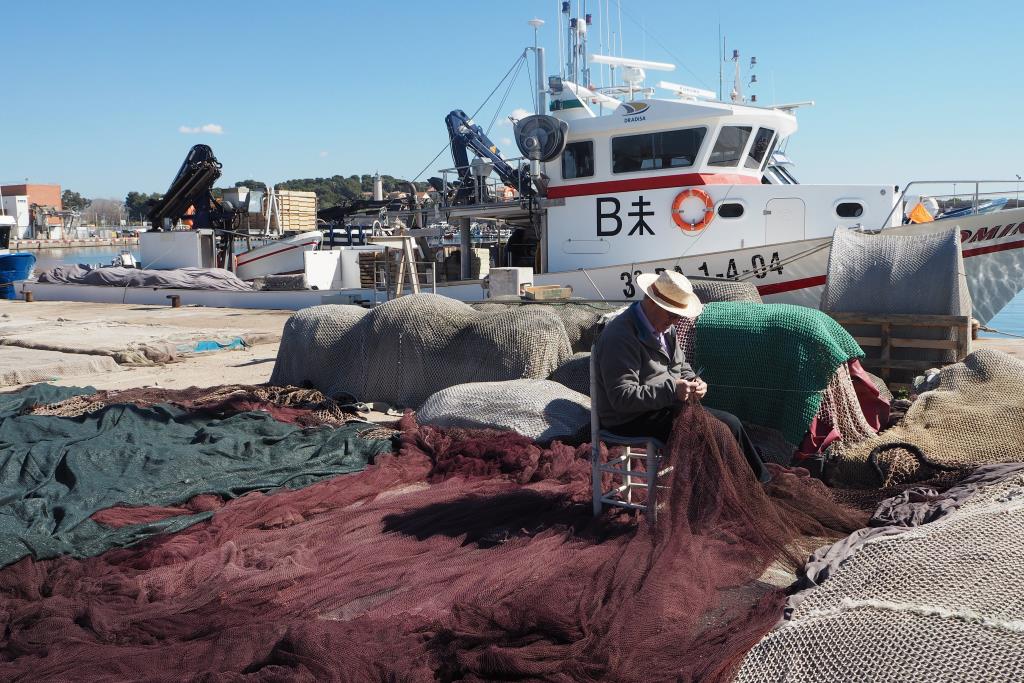
30. L’Any dels Negats: the tragedy that marked the people of the sea
A storm of wind, rain and sea claimed the lives of twenty-two fishermen and badly damaged around ten boats. The catastrophe lived on in memory as l’Any dels Negats. In a community where many families depended on work at sea, the loss of life affected the whole district. Its memory explains the importance of mutual aid and of having rescue resources. Long before the coast became a tourist image, the sea was a livelihood that could turn into a threat.
1895
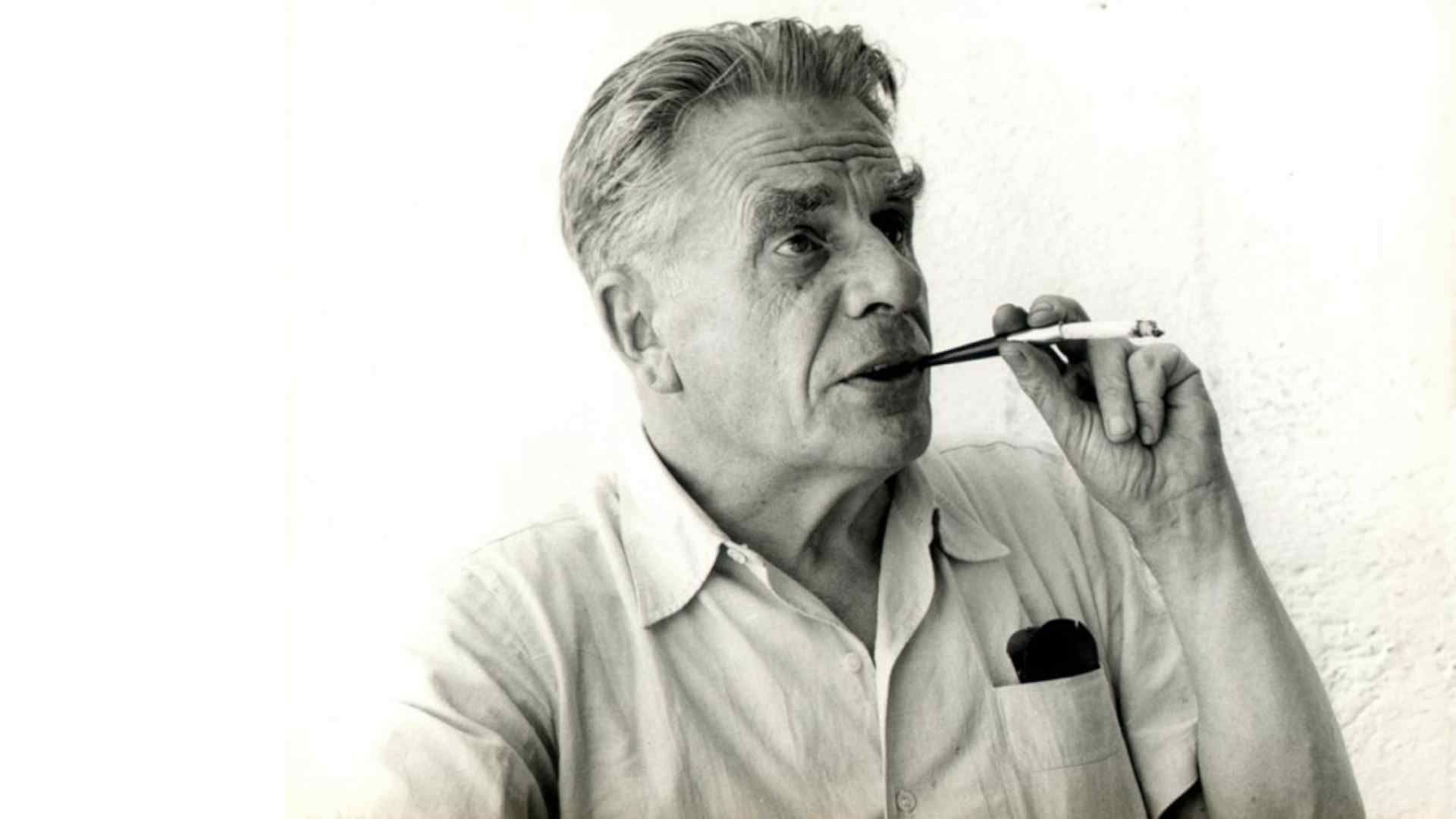
31. Eduard Toldrà: the violinist who started out in the town’s musical scene
Eduard Toldrà was born on 7 April 1895 in the carrer dels Caputxins. His father, a musician and active participant in local cultural life, introduced him to the violin. As a child he performed at the Unió Vilanovesa, before broadening his training and developing a career as a performer, composer and conductor. The curiosity is that his vocation grew within a network of choirs, cafés, associations and local musicians. His figure helps us recognise a musical Vilanova that is not explained solely by its great buildings but also by the gatherings and initiatives of its residents.
1901–1902
32. Pirelli diversified the cotton town
The arrival of Pirelli in 1901 and the start-up of its factory in 1902 opened a different stage in local industry. After decades dominated by textiles, and in a context of crisis, production linked to rubber and electric cables offered a new direction. The company left a deep mark on work and on the urban fabric of Baix-a-mar. The curiosity for today’s visitor is that the residential and public spaces that replaced the old factory conceal an industrial town still close in the memory of many families.

From 1910
33. Ribes Roges and the emergence of a new way to spend the summer
The Ribes Roges development grew from 1910, with chalets, promenades and a residential concept tied to enjoyment of the coast. The surviving villas allow us to recognise different architectural idioms of the early 20th century. The contrast with the fishing district was significant: on one and the same stretch of coast, work, industry and leisure lived side by side. The bridge over the torrent de Sant Joan, built in 1912, helped to link the promenades. The image of an elegant, residential beach was a historical construction, not a permanent condition of the place.

1937–1939
34. The town also had to hide underground
Construction of air-raid shelters began in 1937, and bombing became a reality in January 1938. Railway and factory installations were targets, with consequences for the civilian population. Among the most important shelters were those at the plaça de la Vila and Sant Antoni. The curiosity, hard to perceive when walking about, is the existence of that subterranean geography beneath everyday places. The war changed their functions: a square could be a meeting point on the surface and the entrance to a space of survival below ground.

1949–1954
35. The port that took generations to become reality
After earlier projects and partial works, construction of the port was decisively resumed in November 1949. In 1954 a new stage of commercial activity began. The surprise is that a town with such a long maritime history went so many centuries without the quays that now seem inseparable from it. Fishermen had to haul their boats up the beach and organise their protection from the shore. The port did not create Vilanova’s seafaring vocation: it changed the conditions in which an already ancient community could go on working.

1955–1981
36. The Carnival returned to the streets little by little
The Francoist ban did not manage to wipe out entirely the forms of sociability around the festival. Its return to the streets began in 1955 and was completed in the period 1976–1981. Attributing the whole comeback to a single year therefore oversimplifies a history of continuity, restrictions and the reclaiming of public space. The Comparses became one of its most recognisable expressions. The sweets, the flags and the participating couples show a festival organised by societies, with a collective memory and a personality distinct from other carnivals.

Second half of the 20th century
37. Juanita, the carp that drank from a porrón
Francesc Roig Toqués gathered a museum of seafaring curiosities in his home at Mas Carolina. Among his most singular stories was that of Juanita, a carp he taught to drink from a porrón and to eat from a teaspoon. Her skills achieved international fame and entered local folklore. The curiosity comes with an important detail for anyone looking for images: the real fish must be distinguished from the festive figures of the Carpa Juanita and the Porró, created later for the town’s celebrations.

1981
38. The FIMPT opened a window onto the music of the world
The Festival Internacional de Música Popular i Tradicional was born in 1981 out of an interest in the grallas and roots sounds. Its growth made it possible to place traditional Catalan music in dialogue with artists from elsewhere. The curiosity is that this international opening sprang from a deeply local initiative tied to popular culture. For decades, the festival has given the town a musical identity that joins that of Toldrà, the choirs and the bands. Tradition became a starting point for listening to other cultures.

3 August 1990
39. A locomotive depot became a museum
The Museu del Ferrocarril de Catalunya opened in 1990 in the former locomotive depot, next to the station. The conversion preserved part of the infrastructure that had made the industrial town possible. Its collection lets visitors recognise machines, trades and ways of travelling from different eras. The curiosity is that the place is not a set built to look railway-like: part of its interest lies in its genuine historic installations. Technical heritage went from being a working tool to becoming a space from which to explain economic and social change.

1993
40. Pasífae: a Greek myth on the beach at Ribes Roges
The sculpture of Pasífae, by Òscar Estruga, was installed in 1993 and became one of the most recognisable images of Vilanova. Made of bronze, it refers to the myth relating to the origin of the Minotaur. The curiosity is in discovering that the great figure is not merely a monumental bull: its interior forms part of the narrative. The work links the local coastline with the imagery of Crete and the Mediterranean. It does not depict a historical episode that happened here, but a contemporary artistic interpretation of a classical legend.

2000
41. The old defensive tower filled with art
The Torre Blava–Espai Guinovart opened in September 2000. Josep Guinovart transformed the interior of the Ribes Roges tower into an interpretation of the sea and of the people who live from it. The military structure acquired a new meaning without losing its status as historical witness. One curiosity of the project is that a sculpture park had also been planned, which was ultimately not realised in full. The sail that crowns the tower remained as a visible sign of that artistic ambition.

16 July 2016
42. The Espai Far brings together the memory of Baix-a-mar
The opening of the Espai Far made it possible to bring together seafaring heritage, the Víctor Rojas rescue boat and the curiosities collected by Roig Toqués. Everyday objects and residents’ testimonies help to explain a history that does not fit into great events alone. The curiosity is that the lighthouse keeps its value as a maritime signal and has at the same time become a gateway to the town’s memory. The complex links navigation, fishing, rescue and family life in a single place.

2024–2025
43. Seven hundred and fifty years on, the town read its origins afresh
The commemoration of the 750th anniversary of the Carta Pobla began in 2024 and continued with activities throughout 2025. A documentary, an exhibition, lectures and walking routes made it possible to revisit the birth of the Vila Nova. The final curiosity is that the foundation story remains open to new readings: the same document can speak of medieval privileges, of legendary emancipation and of urban identity. Knowing the past does not mean repeating a single version, but distinguishing what is documented, preserving traditions and understanding how each generation interprets what it has inherited.

Documentation, image sources and editorial notes
Text prepared in October 2026 by cross-checking municipal documentation, heritage institutions, museums and historical studies. The photographs are provided as links to the publications they come from; they are not embedded as local files, and no reuse licence is assumed. To publish the images on another website, the licence must be checked or the relevant permission obtained. If an external image stops displaying, its source link makes it possible to consult it.
Simplified or contradictory dates found in some chronologies have been set aside: the Espai Far was inaugurated on 16 July 2016; the return of the Carnival happened in several phases; the lighthouse’s signalling and the alterations to its tower should not be reduced to a single date. The foundation legend and that of the bell tower are presented as traditions, not as established facts.
- Section 1: Before Vilanova: the Cossetani settlement of Darró · Photo page or publication
- Section 2: The Roman villa that looked out to the Mediterranean · Photo page or publication
- Section 3: La Geltrú grew up around a castle · Photo page or publication
- Section 4: A new town to escape the feudal lord · Photo page or publication
- Section 5: The Carta Pobla favoured two settlements, but only one prospered · Photo page or publication
- Section 6: The beach was a port before it had quays · Photo page or publication
- Section 7: One batlle for three communities · Photo page or publication
- Section 8: A seafarers’ confraternity that came to admit women · Photo page or publication
- Section 9: Cubelles split off and la Geltrú joined up again · Photo page or publication
- Section 10: The bell tower, its angel and a legend about the architect · Photo page or publication
- Section 11: The little Havana: prosperity and the shadows of the colonial world · Photo page or publication
- Section 12: The Carnival already appears in writing · Photo page or publication
- Section 13: Can Papiol: a house built on a kitchen garden · Photo page or publication
- Section 14: The Masia d’en Cabanyes and the unexpected Goya prints · Photo page or publication
- Section 15: The Molí de Mar: an attempt to harness the power of water · Photo page or publication
- Section 16: La Sala was born for dancing and staging theatre · Photo page or publication
- Section 17: Steam and cotton change the scale of the town · Photo page or publication
- Section 18: A night at the theatre could help the hospital · Photo page or publication
- Section 19: A newspaper launched by a twenty-one-year-old · Photo page or publication
- Section 20: Francesc Macià and a family that traded in oil · Photo page or publication
- Section 21: Drinking water became a monument · Photo page or publication
- Section 22: The Farola has a signature of light · Photo page or publication
- Section 23: The Torre Blava was not built to fight pirates · Photo page or publication
- Section 24: The extension that sought to bring the town closer to the Barri de Mar · Photo page or publication
- Section 25: The train overcame the Garraf barrier · Photo page or publication
- Section 26: An exhibition to show what the town could produce · Photo page or publication
- Section 27: The statue of Ventosa and the history that makes us ask questions · Photo page or publication
- Section 28: A temple of knowledge for an industrial town · Photo page or publication
- Section 29: An Egyptian collection arrived in Vilanova · Photo page or publication
- Section 30: L’Any dels Negats: the tragedy that marked the people of the sea · Photo page or publication
- Section 31: Eduard Toldrà: the violinist who started out in the town’s musical scene · Photo page or publication
- Section 32: Pirelli diversified the cotton town · Photo page or publication
- Section 33: Ribes Roges and the emergence of a new way to spend the summer · Photo page or publication
- Section 34: The town also had to hide underground · Photo page or publication
- Section 35: The port that took generations to become reality · Photo page or publication
- Section 36: The Carnival returned to the streets little by little · Photo page or publication
- Section 37: Juanita, the carp that drank from a porrón · Photo page or publication
- Section 38: The FIMPT opened a window onto the music of the world · Photo page or publication
- Section 39: A locomotive depot became a museum · Photo page or publication
- Section 40: Pasífae: a Greek myth on the beach at Ribes Roges · Photo page or publication
- Section 41: The old defensive tower filled with art · Photo page or publication
- Section 42: The Espai Far brings together the memory of Baix-a-mar · Photo page or publication
- Section 43: Seven hundred and fifty years on, the town read its origins afresh · Photo page or publication